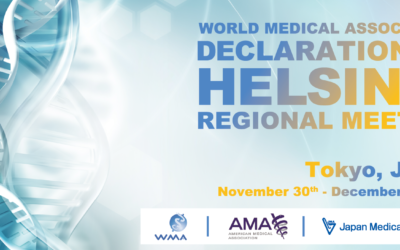
Theme: Human Rights and Multiculturalism
Hong Kong Baptist University, December 3-5, 2013
Article 12 of the UNESCO Declaration on Bioethics and Human Rights (2005) states: “The importance of cultural diversity and pluralism should be given due regard. However, such considerations are not to be invoked to infringe upon human dignity, human rights and fundamental freedoms, nor upon the principles set out in this Declaration, nor to limit their scope.”
During the 2011 Rome workshop focused on the Principle of Vulnerability of the afore mentioned declaration, it soon became clear that with so many different religious traditions, many conceptual problems were unresolved. The East-West contrast was particularly strong with regards to human rights. Many participants of the workshop find the human rights language too individualistic. This is somewhat foreign to major religions where the self does not exist in isolation, but is normally immersed in a web of relations—family, friends, religious community, and society.
The emphasis on human rights was critiqued as predominantly a Western liberal ideal, which in bioethics is translated to mean patient autonomy and free choice. Eastern religions tend to focus more on duties than on rights. This is not to say that individual rights are unimportant. In today’s democratic societies, laws have been drafted to protect individuals and communities against slavery, discrimination, torture or genocide. Yet, it appears unclear at what moment universal rights supersede respect for cultural diversity and pluralism. Some of the bioethics experts are still uncertain about the existence of universal rights and what they consists.
This workshop will focus on human rights and duties as they affect the life sciences, healthcare and the appropriate use of technology in these fields. The subjects involved in these issues are primarily researchers and physicians as well as patients and research subjects. Knowledge, respect, recognition and guarantee of the rights of these individuals and their corresponding duties will be analyzed from multicultural and different religious perspectives.
This meeting will consist in a two-day workshop where bioethics experts from Buddhism, Christianity, Confucianism, Daoism, Hinduism, Islam, and Judaism will gather to discuss the meaning and implications of these issues. The third day would be an open conference for the public. The collection of these papers will result in the publication of a book.
See program
Usually we see people and societies who argue for more or not evidents rights. Hardly ever, or never, I had heard about “right to a beautiful face”. We believe that it is something which we born with it, inherent in human. Only that can miss after an accident (burn, etc), an injury... However, there are children who born like that, without a pleasant face, without an expression that could become apparent the immense beauty of their inner.
In the presence of these children, adults later, we usually suppress the sights, distract the mind, perhaps - in the better case - pray for them. They are the victim of their classmates, their neighboring, and other people in the street who find them. As adults, they will get the stigmata of ugliness: do not marry a wife or husband, be reject by relatives, nearby people, etc; do not find work, except in a dark corner of some job where they will be accepted or exploited them. Their life is almost certainly forced to be a failure.
Read more...
 |
|
From left to right: Thomas Nickel, Albert Ramon,
Alberto Garcia and Thomas Otto
|
In accordance with the mission of creating an appropriate framework to guide the implementation of ethical principles, Professor Alberto Garcia, Director of the UNESCO Chair in Bioethics and Human Rights with its headquarter in Rome, Italy, has signed a document that guarantees an International Code of Ethics.This statement was taken up by two leading European research centers in adult stem cells: ITERA and ITERM. Both ITERM (Institute of Tissue Engineering and Regenerative Medicine) and ITERA (International Tissue Engineering Research Association) have proposed this international Code of Ethics for all institutions that are part of those agencies. This Code is in line with the Universal Declaration on Bioethics and Human Rights of UNESCO (2006).
The signatories are ITERA's President, Prof. Albert Ramon and Prof. Thomas Otto of ITERM.
Read more...
Four posters whose authors are among the members of our Neurobioethics Group have been presented at the International Neuroethics Society (INS) Annual Meeting, Carnegie Institution for Science, Washington DC, November 10th -11th. One of them, regarding the activities (present and future) of our group was also presented at the Society for Neuroscience, Convention Center, Novembre 12th-16th. Two of the posters presented at the INS were particularly appreciated; their respective abstracts will be published in the Journal of Bioethics – Neuroscience (2012).
The title and authors of the abstracts are shown below (the posters' abstracts that will be published are indicated by an asterix):
*1) NEUROSCIENCE NEWS JOURNALISM IN ITALY: WHEN ETHICAL STANDARDS MAKE THE DIFFERENCE by Pensieri C., Cavallotto A. and Gini A.
*2) HOW THE CRIMINAL “SHAPES” THE CRIME : A NEUROCOGNITIVE MODEL FOR PSYCHIATRIC FORENSIC EVALUATION by Casartelli L., Gini A., Baertschi B.
3) RACING FOR (NEUROCOGNITIVE ENHANCEMENT) : WHEN THE TRUE HUMAN PERSON IS AT THE STARTING BLOCKS by Gini A, Farisco M. and Benanti P.
4) THE ITALIAN NEUROBIOETHICS STUDY AND RESEARCH GROUP: PRESENT AND FUTURE OF THE NEUROSCIENCES FROM A PERSONALISTIC APPROACH by Gini A. and Benanti P.
www.neuroethicssociety.org
Religious perspectives on human vulnerability
By
This e-mail address is being protected from spambots. You need JavaScript enabled to view it
, LC, MD, PhD. Fellow, UNESCO Chair in Bioethics and Human Rights
Who are the vulnerable? What are the proper attitudes and responses toward them, especially in the field of biomedicine?
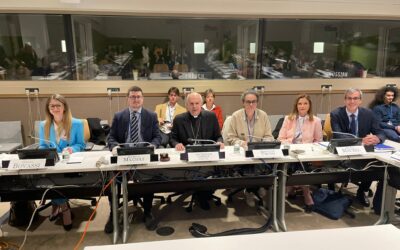
These were the questions discussed at a recent workshop held in Rome from October 9-11, with experts hailing from six world religions—Buddhism, Christianity, Confucianism, Hinduism, Islam, and Judaism. This was a follow-up to similar conferences held in Jerusalem two years ago organized by the UNESCO Chair in Bioethics and Human Rights.
Read more...
|
The School of Medicine of the Anahuac University of Mayab in Mexico was recently proud to announce its new Diploma in Bioethics in cooperation with the Rome-based UNESCO Chair of Bioethics and Human Rights.
The course, beginning in November 2012, offers a bioethics program unique to the southeast of Mexico and is the first fruit of a new partnership with UNESCO Chair. The 100-hour intensive course introduces students to the chief bioethical issues that will empower professionals to apply sound ethical judgments in fields as diverse as Medicine, Psychology, Dentistry, Nursing, Nutrition, Social Work and Family Sciences.
The main topics of the course are as follows:
- Fundamentals of Bioethics
- Bioethics and Sexuality
- Bioethics and the Beginning of Life
- Current Themes of Bioethics
- Bioethics and End of Life Issues
Read more...
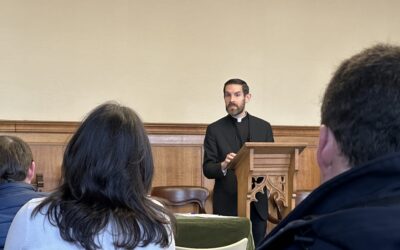
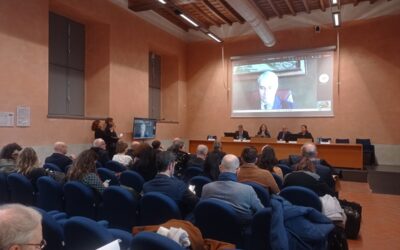
On February 20, 2012, UNESCO Chair Fellow Fr. Joseph Tham gave a presentation on the “Religious perspective on the Principle of Human Vulnerability of the UNESCO Declaration on Bioethics and Human Rights” at the Hong Kong Baptist University. This event was co-organized by our UNESCO Chair and the Centre for Applied Ethics at the university. Prof. Ellen Zhang, researcher at the center who attended the recent Rome workshop, chaired the meeting.
Fr. Tham first gave a background of the workshop in light of the troublesome question of religious contribution to bioethics. He gave a general outline on the genesis of the UNESCO Declaration of Bioethics and Human Rights to the participants. A brief description of the 2011 Rome workshop was presented, with the presence of three professors of the Baptist University who presented papers at the workshop.
Read more...
Interdisciplinary workshop on Neuroethics
On May 2-4, a small group of philosophers, theologians, physicians, scientists, lawyers, and bioethicists gathered to discuss the work of the first few chapters of Walter Glannon’s book Brain, Body, and Mind: Neuroethics with a Human Face. The author was also present in this workshop which was sponsored by the UNESCO Chair on Bioethics and Human Rights, the Neurobioethics group, the Institute of Science and Faith, the Institute for the Medical Humanities at the University of Texas Medical Branch, Galveston, and Health, Law and Policy Institute at the University of Houston Law Center.
We discussed many interesting questions about the mind and its relationship with the brain, consciousness and even the soul.
Read more...
The Neurobioethics Group published their first article, "Consciousness and the end of life issues: a multi and interdisciplinary proposal by the Neurobioetica Research and Study Group in Rome" in the Proceedings of the Conference of the National Forensic and Legal Medicine Association, Ancona, Italy (September 29th - October 2nd). The authors of this article are: R. Amante V.A., Amodio G., Chieragatti P., Ciadamidaro, M. Farisco, A. Garcia, A. Gini, R. Luna, M.A. Mangione, P.R. Pascual, L.C., A. Soddu.
Italian title: R. Amante V.A., Amodio G., Chieragatti P., Ciadamidaro, M. Farisco, A. Garcia, A. Gini, R. Luna, M.A. Mangione, P.R. Pascual, L.C., A. Soddu, "La Coscienza e le cosiddette Questioni di âFine Vitaâ: lâapproccio multi e interdisciplinare proposto dal Gruppo di Neurobioetica," ATTI DEL CONGRESSO NAZIONALE DI MEDICINA LEGALE, Ancona, 29 settembre - 2 ottobre 2009

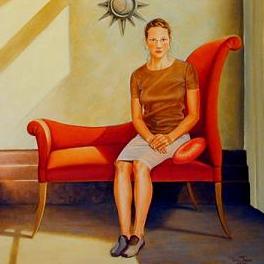
Global Values Made Visible: The UNESCO Global Art Exhibit Unveiled in the UN Headquarters Gives a Human Face to Abstract Concepts
Michael Baggot
UNESCO Chair Correspondent
“How would you create an image of respect for vulnerable people?”
Those gathered at the General Assembly entrance of the United Nations Headquarters Building the evening of October 3 found breathtaking artistic responses to this question during the unveiling ceremony of the eleven winning pieces of the UNESCO Chair of Bioethics and Human Rights Global Art Competition.
“As I survey this exhibit and its call for artists to create art that deepens the appreciation for human life, I am reminded of a quote by G.K. Chesterton, who stated, ‘Art, like morality, consists in drawing the line somewhere,’” stated the Permanent Observer of the Holy See to the United Nations, Archbishop Francis Chullikatt .
Read more...
|